Automation, data platforms and agentic solutions for real workflows
Umatiq builds custom operational software for businesses that need to reduce manual work, structure business data and make document-heavy processes easier to review.
Automate the work that slows your team down
Many organisations still rely on repetitive manual work to keep important processes moving: collecting documents, entering information into spreadsheets, checking data, preparing reports and handing tasks from one person to the next.
Umatiq builds custom automation systems for operational workflows. We examine how a process currently works, identify where time is lost or errors arise, and develop software that handles the repeatable parts in a reliable and structured way.
The goal is not to automate for the sake of automation. It is to reduce unnecessary manual effort, improve consistency and give teams more time for work that requires judgement, expertise and human contact.
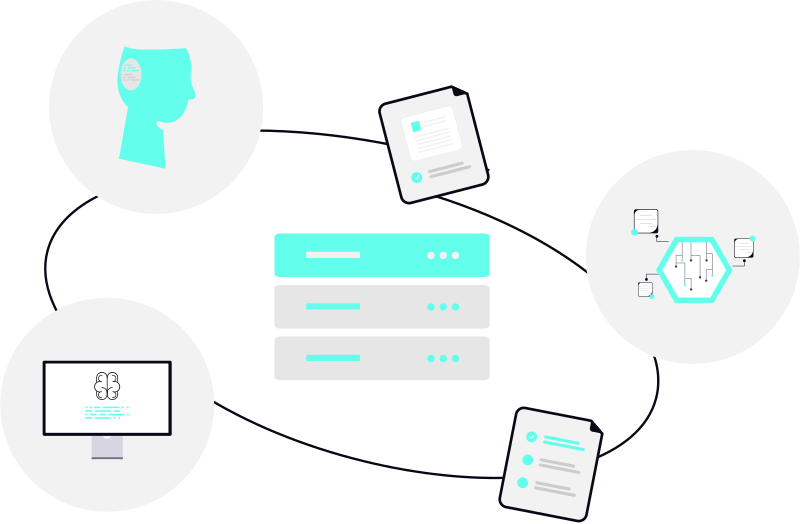
Connect repeated steps into one reliable process
Many business processes are not difficult because of one complex task, but because of many small actions repeated every day: receiving information, checking completeness, updating files, assigning tasks, preparing outputs, sending updates and monitoring progress.
We turn these fragmented activities into structured digital workflows. A system can guide information from intake to review and final output, automatically performing the repetitive actions while giving the organisation visibility over status, exceptions and next steps.
This reduces dependence on separate spreadsheets, manual handovers and scattered email communication. More importantly, it creates a process that is easier to manage, improve and scale over time.
Turn document-heavy work into structured information
A large amount of operational information is still locked inside PDFs, forms, contracts, reports and other business documents. Reading these files manually and transferring the relevant details into spreadsheets or internal systems is slow, difficult to scale and vulnerable to inconsistencies.
We build automation systems that collect documents, identify the relevant information and convert it into structured, usable data. Depending on the process, this may include document classification, data extraction, checks for missing information and a review environment in which employees can verify the output before it is used elsewhere.
This is particularly valuable for organisations that repeatedly process contracts, administrative files, client records, applications, reports or other document-based workflows.
Make operational data immediately usable
Automation should not stop once information has been processed. The output should help a team work more effectively, whether that means generating a structured dataset, preparing a report, producing a dashboard or delivering information in a format that can be used by another system.
Umatiq builds reporting and output functionality directly around the workflow. This can provide a clear overview of processed cases, outstanding exceptions, progress over time and the information needed for internal or external handovers.
By combining processing and reporting in one system, organisations gain more than time savings: they gain a clearer and more reliable view of their own operations.
Built around the way your organisation actually works
Every operational process contains its own rules, exceptions, documents and responsibilities. That is why Umatiq does not begin with a generic automation product and try to force it into an existing workflow.
We start with the process itself: how information enters the organisation, which steps are repetitive, where decisions are made, which checks are required and what the final output needs to support. From there, we design and build a practical system that fits the work being done.
This may be a focused internal tool for one recurring task, a document-processing application, a validation workflow or a broader automation platform supporting multiple parts of the business. In each case, the aim is the same: to turn manual operational work into a clear, dependable and usable digital system.
Have a process that should work better?
If your team spends time processing documents, checking data, managing repeated administration or preparing recurring reports, Umatiq can help turn that workflow into a reliable digital system.
Discuss an automation workflow
Turn scattered business data into a reliable operational platform
Many organisations have valuable information spread across spreadsheets, documents, exports, emails and separate systems. The data exists, but it is difficult to access consistently, keep up to date or use across the business.
Umatiq builds custom data platforms that bring operational information together in one structured environment. We organise the data, design the workflows around it and create clear interfaces through which teams can search, review, update and report on the information they depend on.
The result is not simply a dashboard. It is a dependable digital foundation for day-to-day work, better reporting and future automation.
Create one structured source for operational information
Business data is often stored in formats created for immediate tasks rather than long-term use: individual spreadsheets, downloaded reports, document folders or information held inside separate applications. Over time, this makes it difficult to know which data is current, complete or suitable for reporting.
We design data platforms that bring this information into a structured model built around the needs of the organisation. Rather than searching through separate files or manually consolidating information whenever it is needed, teams can work from one organised environment with clearly defined data fields, relationships and outputs.
This creates a more reliable basis for internal processes, client work, management reporting and further digital development.
Make important data accessible to the people who need it
A useful data platform should not require employees to understand the technical systems behind it. People need to be able to find the right information, understand its status and take the next action without relying on complex spreadsheets or specialist knowledge.
Umatiq builds practical interfaces around business data: searchable overviews, structured detail pages, review screens, filters, status views and update flows tailored to the way teams actually work.
This makes information easier to use across the organisation while reducing the time spent locating files, combining exports or asking colleagues where the latest version can be found.
Build reporting directly on reliable data
Reporting becomes unnecessarily difficult when the underlying information is fragmented or manually maintained in several places. Teams may spend significant time preparing the data before they can even begin to analyse it or present it to others.
A structured data platform allows reporting to become a natural output of the operational process. Dashboards, management overviews, recurring reports and external exports can be built directly on the same information used in daily work.
This helps organisations monitor progress, identify exceptions, compare results over time and produce consistent output without rebuilding the underlying dataset every time a question arises.
Connect documents, systems and future workflows
Operational data rarely originates from a single source. It may begin in uploaded documents, existing spreadsheets, administrative systems, external exports or future system integrations. A good platform needs to accommodate this reality rather than treat each source as a separate problem.
We build data platforms that can combine structured inputs with information extracted from documents and, where appropriate, connect to other tools or systems. This creates a central layer through which data can be reviewed, maintained and reused across different workflows.
Once this foundation is in place, it becomes much easier to introduce automation, validation, reporting functionality or AI-supported tools in a controlled and useful way.
Designed around your data and your organisation
A data platform only creates value when its structure reflects the business behind it. Generic dashboards or databases are rarely enough when an organisation works with its own terminology, documents, rules, responsibilities and reporting needs.
Umatiq starts by understanding which information matters, where it currently comes from, who needs to use it and what decisions or processes it should support. From there, we design and build a platform that makes the data reliable, accessible and usable in practice.
This may begin as a focused internal portal for one operational dataset or develop into a broader platform connecting multiple processes and information sources. In both cases, the purpose is the same: to give the organisation a strong digital foundation for working with its own data.
Need a better way to work with your business data?
If important information is spread across documents, spreadsheets or disconnected systems, Umatiq can help turn it into a structured platform your team can use every day.
Discuss a data platformPrivate AI systems built around your business
AI becomes far more valuable when it can work with the information and processes that are specific to your organisation. But internal documents, client information and operational data may be too sensitive to simply share with public, general-purpose AI tools.
Umatiq builds private AI-supported systems that allow organisations to work with their own knowledge and documents inside a controlled environment. These systems can help teams search internal information, review complex files, prepare outputs and support day-to-day decisions without treating sensitive business data as public input.
Where useful, a solution can still make controlled use of external capabilities, such as searching public internet sources or supporting non-sensitive tasks with external AI services. The objective is to combine useful AI functionality with clear boundaries around private information, human oversight and business control.
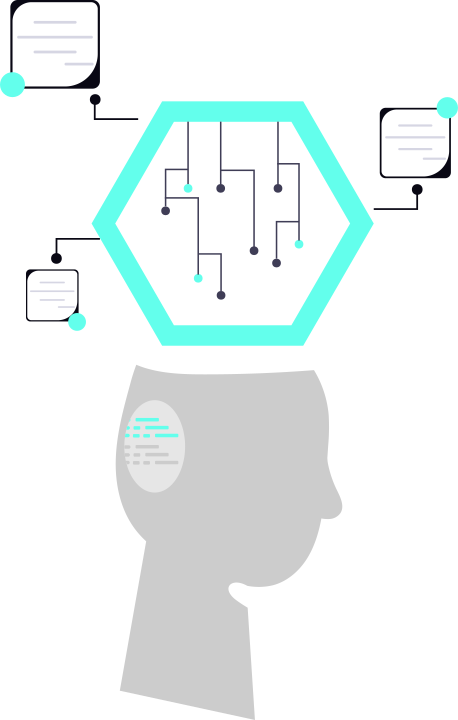
Use AI with internal knowledge without losing control of it
Many valuable AI use cases depend on information that is not intended for public use: internal documents, client records, policies, contracts, project files, operational procedures or specialist knowledge developed within the organisation.
A private AI system can make this information easier to work with while keeping the solution within a controlled environment. Employees can search relevant knowledge, ask questions about approved documents or retrieve information needed for a task without relying on a generic public tool that has no defined boundary around sensitive input.
This makes AI useful in areas where confidentiality, access control and responsibility matter just as much as speed or convenience.
Combine private information with controlled external capabilities
Keeping internal information protected does not mean an AI-supported system must be isolated from every outside source. In some workflows, external information is genuinely useful: an employee may need current public information, regulatory updates, market context or general research alongside internal knowledge.
Umatiq can design systems that distinguish between private business context and controlled external actions. For example, a system may work with sensitive internal documents inside a protected workflow while separately searching public sources where additional external information is required.
The important point is that these capabilities are designed deliberately. Confidential information should not be sent outward unnecessarily, and external connections should serve a clear purpose within the workflow.
Support document review and knowledge-intensive work
Some documents do not only need to be stored or processed; they need to be understood. Teams may need to identify important clauses, compare information across files, answer detailed questions, prepare summaries or determine which elements require further review.
We build AI-supported tools that help employees work through these tasks more efficiently. A system can retrieve relevant sections, organise findings, prepare a first analysis or highlight information that deserves attention, while still leaving responsible review and final judgement with the user.
This is particularly valuable in document-heavy environments where knowledge is specialised, files are numerous and the cost of overlooking important details is high.
Build assistants that operate inside real workflows
An AI assistant becomes valuable when it supports an actual business process rather than existing as a separate chat interface. Teams may need help reviewing a case, preparing a report, navigating internal procedures, finding relevant information or determining the next required step.
Umatiq builds agentic solutions around these practical situations. Depending on the use case, a system can combine approved internal knowledge, structured business data, document review, workflow actions and selected external tools within one controlled process.
This produces focused tools that support the work people already do, rather than introducing AI without a clear operational role.
Keep privacy, traceability and human review at the centre
AI-supported systems require careful design when they work with sensitive data or influence business-critical activity. Organisations need to understand what information the tool can access, where outputs come from, when external services may be used and which decisions remain with employees.
We design solutions with these boundaries in mind. Depending on the workflow, this can include controlled access to documents, source references, review steps, approval moments, restricted external actions and clear separation between private information and public research tasks.
The aim is not to remove human responsibility. It is to give teams useful AI support while maintaining control over confidential information, process quality and final decisions.
Start with a valuable use case, not with AI hype
Not every business problem needs AI. Sometimes a structured data platform or a reliable automation workflow is the more appropriate solution. Private AI systems are especially valuable where teams work with large volumes of knowledge, sensitive documents, repeated analysis or complex questions that cannot be handled by simple rules alone.
Umatiq begins with the actual process: what information is involved, what level of privacy is required, where external information may be useful, what employees need support with and what must remain under human control.
From there, we can build a focused private knowledge tool, a document-review assistant, a workflow copilot or a broader agentic system connected to operational data and carefully selected external capabilities.
Want to use AI with sensitive business information?
If your organisation works with private documents, internal knowledge or complex review processes, Umatiq can help design an AI-supported system that makes this information more useful while keeping control, privacy and reliability at the centre.
Discuss a private AI systemBest suited for teams with complex internal work
Umatiq is a strong fit when the current process depends on manual document review, repeated data checks, spreadsheet-based operations, disconnected systems or sensitive internal knowledge.
The goal is not to add technology for its own sake. The goal is to build systems that make work faster, more consistent and easier to control.
Discuss a workflow